
The Business Therapist You Didn't Know You Needed
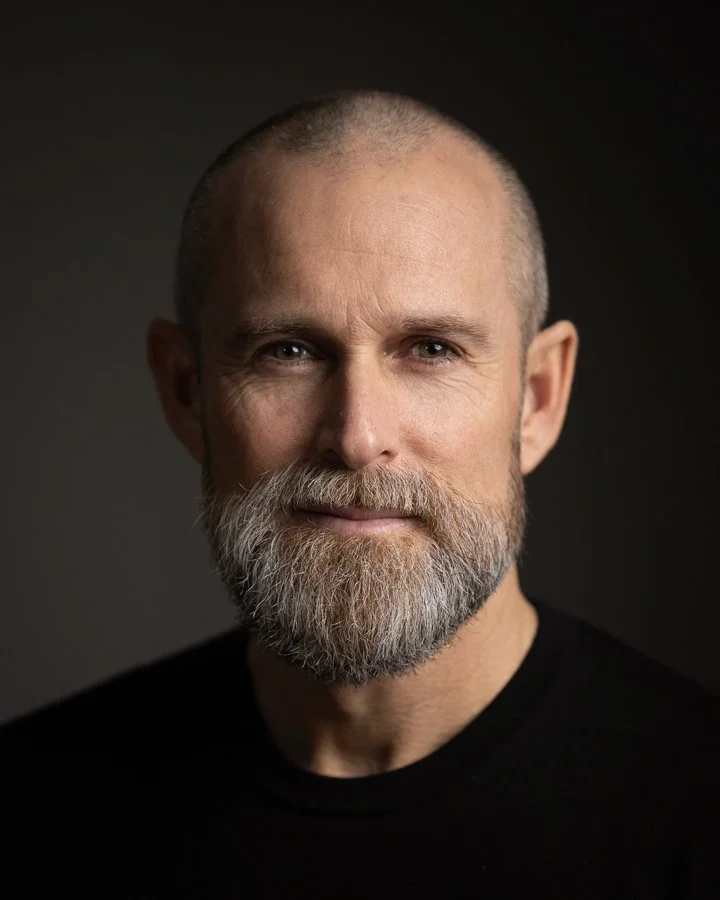
My clients have started calling me their "business therapist."
I wasn't sure how I felt about that at first. I'm not a licensed therapist, and I want to be clear about that. But the more I sat with it, the more I realized it actually captures something true about my work, because what I offer is more than a "coach" or "consultant."
What I actually do is work with the whole you. Not just the version of you that shows up on an org chart.
And if you've ever felt like something invisible keeps getting in the way of where you want to go, this might be the most important thing you read today.
Why Most Business Problems Aren't Really Business Problems
Here's what I've learned after more than two decades working with executives, leadership teams, and organizations across the private and public sectors.
Most of us are fighting ourselves every single day at work. Not because we lack talent. Not because we lack ambition. But because we're operating from a learned identity, one built by every experience, relationship, and environment that shaped us.
That learned identity runs deep. It determines how you respond under pressure. How you show up in difficult conversations. How you lead when things get hard. How you make decisions when the stakes are high. And most of the time, we don't even realize it's happening.
The problem is that the learned identity that got you here may not be the one that gets you where you actually want to go.
The Agreements We Make With Ourselves
In his book The Four Agreements, Don Miguel Ruiz introduces a concept that sits at the center of my work with clients: throughout our lives, we make agreements with ourselves. These agreements are shaped by the people around us, the environments we grew up in, the experiences we had, and the stories we told ourselves about what those experiences meant.
Some of those agreements serve us. Many don't.
Here is what most people never connect: the agreements you made outside the office show up inside it every single day. The belief that you have to do everything yourself. The fear that asking for help is a sign of weakness. The habit of avoiding conflict until it becomes a crisis. The voice that tells you that you're not quite ready, not quite good enough, not quite there yet.
These are agreements. And they are the foundation of your learned identity.
The work I do with clients begins here. Not with a new strategy or a restructured org chart. With awareness. Because you cannot change what you cannot see.
Building Your Chosen Identity
Once we bring those agreements into the light, we can begin the real work: making new ones. Agreements that are aligned with the life and outcomes you actually want. Agreements that reflect who you want to be as a leader, a business owner, a professional, and a person.
This is how we build your chosen identity.
Your chosen identity is not a performance. It is not a persona you put on at work and take off at home. It is the version of you that is fully aligned with your goals, your values, and the life you are working toward. When you operate from your chosen identity, everything changes. How you lead. How you communicate. How you make decisions. How you handle adversity. How you show up for the people around you.
This is the anchor of everything I do with clients. We start with your why. Your goals. What you actually want from this life. And then we build the identity, the habits, and the systems that get you there.
You Do Not Rise to the Level of Your Goals
James Clear, in his book Atomic Habits, puts it better than I ever could:
"You do not rise to the level of your goals. You fall to the level of your systems."
This is one of the most important truths in my work, and one of the most uncomfortable.
Because most of us have big goals and broken systems. We know where we want to go. We just keep getting in our own way. Our daily routines don't reflect our priorities. Our mindset defaults to old patterns when pressure hits. Our habits pull us back toward the familiar even when the familiar isn't working.
Your daily systems, how you think, how you structure your time, how you respond to challenges, how you treat yourself and others, determine whether you reach your goals. Not your intentions. Not your talent. Your systems.
Most of the time, we are our own biggest obstacle in this area. And that is not a criticism. It is simply what happens when we operate on autopilot, running the same learned identity programming that has always run beneath the surface.
The good news is that systems can be changed. Agreements can be rewritten. Identities can be chosen.
What a "Business Therapist" Actually Does
When I work with clients, I bring together a set of disciplines that most people expect to find in separate rooms with separate specialists.
Personal development. Leadership development. Business strategy. Operational design. Organizational thinking. Business problem solving.
All of it works together, because you cannot separate the person from the leader, or the leader from the business. When one is struggling, the others feel it. When one grows, the others grow too.
My clients come to me with strategic challenges, team breakdowns, growth plateaus, leadership transitions, and organizational complexity. But almost always, what we discover together is that the business problem has a human root. And when we address that root, the business problem becomes much more solvable.
That is what a "business therapist" does.
Who This Is For
Work is harder than ever right now. The pressure is relentless. The problems are complex. The relationships are complicated. And most people, whether they are leading teams in Seattle or running organizations nationally, are navigating all of it without anyone in their corner who can see both the business and the person clearly.
This work is for you if:
You are a senior leader, executive, or business owner who feels like something is blocking you but cannot quite name what it is
You have achieved a level of success and yet feel like you are running on old programming that no longer serves you
You are facing a significant challenge, transition, or decision and need more than tactical advice
You want to build a business, a team, and a life that actually reflect who you are and where you want to go
You are ready to do the real work, not just the surface work
Ready to Talk?
Are your current systems, mindset, habits, and identity actually built to get you where you want to go?
If you've been wondering why certain things keep stalling in your business, your team, or your career, that's exactly where we start. Fill out the form below, and I'll be in touch personally.
Ryan Hodgson is the founder of Rysing Tide, a Seattle-based executive coaching, strategic consulting, and fractional COO practice serving clients nationally. For more than two decades he has worked with executives, business owners, and leadership teams to help them build the chosen identity, the habits, and the systems that get them to where they actually want to go. He has done this work with leaders and teams at JPMorganChase, US Bank, BILL, Cushman and Wakefield, the US Navy, Entrepreneurs Organization, King County, Seattle Symphony, and Lakeside School, among others.
